A working commercial cleaning checklist has five tiers — every visit, weekly, monthly, quarterly and annual — and lists tasks by area rather than by room name. Below is the complete version we use to build scopes of work for Metro Vancouver offices, clinics, strata buildings, retail units and warehouses. Copy it, delete what does not apply to your building, and attach it to your service agreement.
How to use this checklist
- Walk your building and mark every task as every visit, weekly, monthly, quarterly, annual or not applicable.
- Count your washroom fixtures and note your floor types — these drive the time estimate more than square footage does.
- Give the finished list to every provider you are quoting so all bids cover identical work.
- Attach the final version to the contract as a schedule, so it can be updated without redrafting the agreement.
- Use the inspection section at the bottom as your monthly quality check.
Every visit (nightly or scheduled service days)
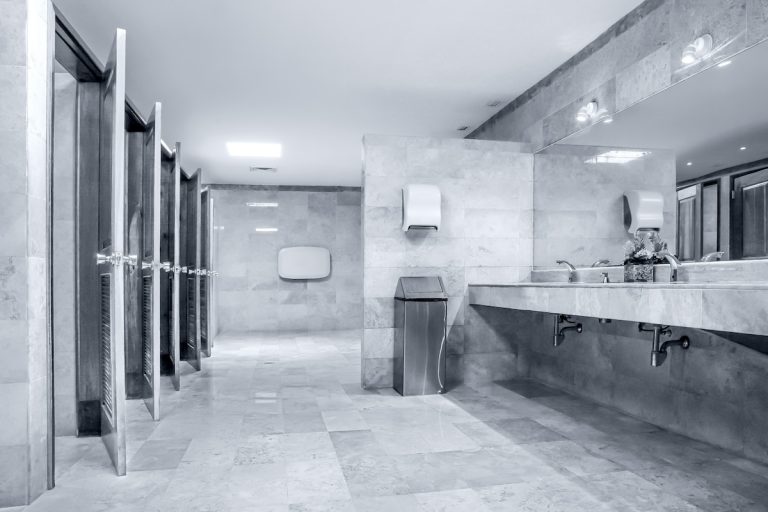
Washrooms
- Clean and disinfect toilets, urinals and seats, including bases and behind fixtures
- Clean and disinfect sinks, counters, taps and splash areas
- Clean mirrors and polish chrome
- Wipe and disinfect partitions, handles, dispensers and light switches
- Refill hand soap, paper towel, toilet tissue and seat covers
- Empty waste and sanitary bins; replace liners
- Sweep and damp mop floor with disinfectant, including corners and behind doors
- Check and report leaks, blockages or broken fixtures
Kitchen and breakroom
- Wipe and disinfect counters, tables and chair backs
- Clean sink and taps; remove debris from drain
- Wipe appliance exteriors: fridge, microwave, dishwasher, coffee machine, kettle
- Disinfect handles, switches and shared touchpoints
- Empty waste, recycling and organics; replace liners; wipe bin lids
- Sweep and damp mop floor
Reception, lobby and entrances
- Spot-clean entrance glass, door frames and push plates
- Vacuum or shake entrance matting; check for saturation in wet weather
- Wipe reception counter and visible surfaces
- Straighten seating and remove debris
- Vacuum or mop floor; address salt and grit residue in winter
Open office, meeting rooms and corridors
- Empty deskside and communal waste; replace liners as needed
- Wipe meeting tables, reset chairs, clean whiteboards
- Vacuum traffic lanes and visible debris
- Spot-clean interior glass and partition smudges
- Disinfect high-touch points: door handles, switches, rails, elevator buttons, shared equipment
- Spot-clean fingerprints on doors and walls
Every product used on these tasks needs a safety data sheet and trained handling under WHMIS requirements. Ask your provider for the product list that goes with your checklist — a scope of work and a chemical list belong together.
Weekly
- Full vacuum of all carpeted areas including edges, corners and under desks
- Damp mop all hard floors throughout, not just traffic lanes
- Dust all horizontal surfaces below shoulder height: sills, ledges, filing cabinets, monitors’ bases
- Clean interior partition glass fully
- Disinfect phones, headsets and shared devices
- Wipe waste receptacle exteriors
- Detail washroom: descale taps, clean dispenser interiors, scrub grout lines in high-use stalls
- Clean microwave interior and wipe fridge exterior seals
Monthly
- High dusting above shoulder height: ledges, tops of cabinets, frames, signage
- Vents, diffusers and return-air grilles
- Light fixtures and exit sign housings
- Baseboards, door frames and kick plates
- Elevator tracks and interior panels
- Stairwell handrails and treads, full detail
- Spot-clean walls and corners for scuffs
- Vacuum upholstered seating in reception and meeting rooms
Quarterly
- Carpet extraction in traffic lanes and entrances (full extraction 2–4 times per year)
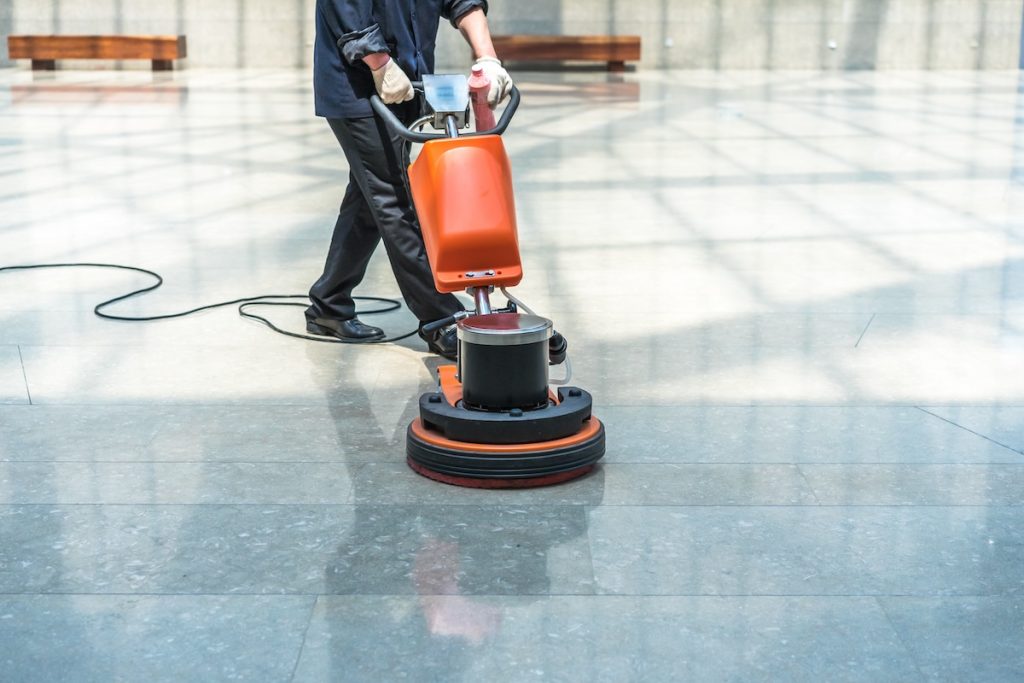
- Hard-floor scrub and recoat
- Interior window cleaning, both sides of partition glass
- Clean behind and under moveable furniture
- Deep-clean fridge interior with tenant notice
- Descale washroom fixtures and clean floor drains
- Review the checklist itself against how the building is actually being used
Annual
- Strip and seal or full restoration of vinyl and tile floors
- Full carpet extraction throughout, including low-traffic zones
- Upholstery cleaning
- Exterior window service (specialist contractor)
- Full building detail: ceiling tiles, blinds, high ledges, ductwork grilles
- Parkade, loading bay and garbage room deep clean where applicable
These periodic items are the ones most often dropped when a contract is priced down. The commercial cleaning cost guide shows what each typically adds, and how often a commercial building should be cleaned covers how to set the right cycle for your traffic level.
Metro Vancouver seasonal add-ons
| Season | Add to the checklist |
|---|---|
| October–March | Extra entrance matting, wet-floor signage protocol, twice-daily lobby floor checks, increased consumable stock, salt residue removal |
| April–May | Pollen and dust: interior glass, sills, vents and high dusting moved up a cycle |
| June–August | Schedule strip and seal, carpet extraction and deep work while occupancy is lower |
| November–December | Temporary frequency increase for events, holiday traffic and public-facing areas |
Industry-specific add-ons
- Medical and dental: documented disinfection with contact times, colour-coded equipment, treatment-room turnover, regulated waste handling. See choosing disinfectants for dental and medical offices.
- Retail: fitting rooms, fixture and display dusting, POS counters, entrance glass at higher frequency, post-season deep clean.
- Warehouse: auto-scrubber cycles, dock and staging areas, racking dusting, lunchroom and locker detail.
- Strata: lobby, amenity rooms, corridors, stairwells, garbage and recycling rooms, parkade sweeping, elevator interiors.
- Restaurants: back-of-house degreasing, floor drains, equipment exteriors, health-inspection readiness — see our health inspection prep checklist.
The monthly inspection checklist
Quick answer: a cleaning checklist without an inspection checklist is a wish list. Score these ten items monthly, out of five each, and share the result with your provider.
- Washroom fixtures: clean, descaled, odour-free
- Dispensers: all stocked, none jammed
- Kitchen: counters, sink and appliance exteriors clean
- Carpet: no visible traffic lanes or untreated spots
- Hard floors: no film, streaking or edge build-up
- Glass and partitions: no smudges at hand height
- High dusting: sills, vents and ledges clear
- Waste: all bins emptied, liners fitted, bin exteriors clean
- Corners and edges: no accumulated debris
- Periodic work: on schedule and documented
Scoring the same ten items every month turns a subjective impression into a trend line — and a trend line is what lets you raise a problem before it becomes a reason to re-tender. The clause language for that sits in our guide to commercial cleaning contracts.
The tasks most often missed
Across hundreds of Metro Vancouver inspections, the same items account for most quality complaints. None of them are difficult; they are simply the tasks that get dropped first when a shift is running short. Check these before anything else.
- Carpet edges and corners. The centre of a room gets vacuumed every visit; the perimeter accumulates for months and is the first thing a visitor notices.
- Behind and beside toilets. The main fixture is always cleaned. The floor behind it, and the pipe run beside it, are the source of most washroom odour complaints.
- Glass at hand height. Door pushes and partition edges collect prints at exactly the height people look.
- Bin exteriors and lids. Liners get changed; the container itself gets wiped far less often than it should.
- Vents and sills. Invisible until the light hits them, then visible to everyone in the room.
What the crew should report back to you
Your cleaners are in the building more consistently than anyone else, usually when it is empty and quiet. That makes them a maintenance early-warning system, but only if the checklist asks them to report. Add a short log to the bottom of the nightly sheet:
- Leaks, drips, running toilets and slow drains
- Burnt-out lights and exit signage
- Doors not latching, failed fobs, propped fire doors
- Carpet damage, tile lifting, trip hazards
- Pest activity or unusual odours
- Consumables running low ahead of the next delivery
A single early report of a slow washroom leak pays for a month of cleaning. Make the reporting duty explicit in the scope of work rather than hoping for it.
Frequently asked questions
What should be on a daily office cleaning checklist?
Washroom cleaning, disinfection and restocking; kitchen and breakroom sanitation; waste and recycling removal; high-touch point disinfection; entrance and lobby floors; and vacuuming of traffic lanes. Everything else can rotate on a weekly or monthly cycle.
How is a janitorial checklist different from a scope of work?
A checklist is the operational tool the crew works from. A scope of work is the contractual version of the same list, with frequencies and areas defined so it can be enforced. The scope should be built from the checklist, not the other way round.
Who should own the checklist, us or the cleaning company?
You should. A provider-supplied checklist reflects their standard offering; a client-owned checklist reflects your building. Have the provider mark up yours rather than replacing it, and attach the agreed version to the contract.
How often should the checklist itself be reviewed?
Quarterly, and immediately after any change of more than roughly 15 percent in headcount or cleanable area. Buildings change faster than contracts do, and an outdated checklist is the usual reason a well-run contract starts feeling wrong.
Want this checklist built for your building?
Vancouver Office Cleaners will walk your site, mark up this checklist against what you actually have, and return it as a costed scope of work you can put out to bid — including to us. We provide commercial cleaning across Metro Vancouver.