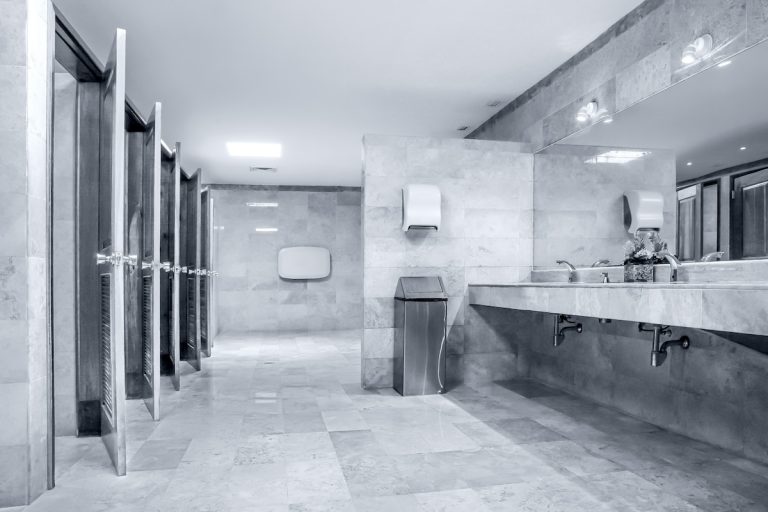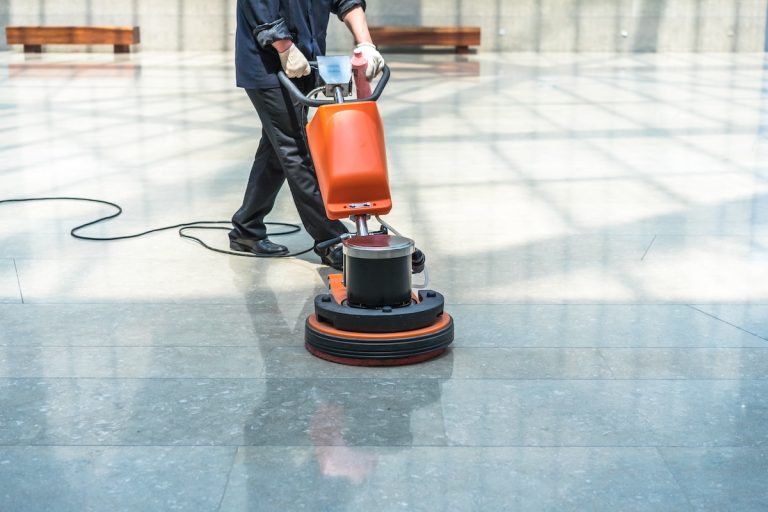
Janitorial services are the recurring, day-to-day maintenance cleaning of a building — washrooms, waste, floors, high-touch surfaces — performed on a set schedule. Commercial cleaning is the wider category that includes janitorial work plus the periodic, project and specialty cleaning a facility needs a few times a year. In practice, most Metro Vancouver providers use the two terms interchangeably, so the words on the proposal matter far less than the scope of work behind them.
That said, the distinction does real work in three situations: when you write an RFP, when you split a budget between operating and project spend, and when you are comparing a nightly crew against a specialty contractor. Here is how the terms are actually used.
Commercial cleaning vs. janitorial services at a glance
| Janitorial services | Commercial cleaning (broader) | |
|---|---|---|
| Cadence | Daily to weekly, ongoing | Ongoing plus periodic and one-time |
| Typical work | Washrooms, waste, vacuuming, mopping, high-touch disinfection, restocking | All janitorial work plus carpet extraction, floor restoration, windows, post-construction, deep cleans |
| Staffing | Assigned nightly crew, sometimes a day porter | Nightly crew plus specialised technicians and equipment |
| Pricing | Fixed monthly contract | Monthly contract plus project quotes, or bundled |
| Budget line | Operating expense | Operating plus capital or project spend |
| Equipment | Vacuums, microfibre, carts, standard chemicals | Auto-scrubbers, extractors, burnishers, HEPA and specialty systems |
What are janitorial services, specifically?
Quick answer: janitorial services keep a building in its normal working condition day after day. The work is repetitive by design — the same tasks, the same rooms, the same standard — and its value is consistency rather than transformation.
- Washroom cleaning, disinfection and consumable restocking
- Waste and recycling collection, liner replacement
- Vacuuming carpet and damp-mopping hard floors
- Kitchen and lunchroom sanitation
- High-touch point disinfection: door handles, switches, rails, shared equipment
- Entrance glass spot-cleaning and mat management
- Dusting of horizontal surfaces on a weekly rotation
Because the same staff handle chemicals nightly, janitorial work carries real occupational-safety obligations. Every product on the cart needs a safety data sheet and trained handling under WHMIS, as outlined by the Canadian Centre for Occupational Health and Safety. If a bidder cannot describe their WHMIS training, that is a scope question and a liability question at once.
What does commercial cleaning add?
Quick answer: commercial cleaning adds the restorative and specialised work that nightly service cannot do — the jobs that need machinery, longer windows, or specific certification.
- Carpet hot-water extraction and encapsulation
- Hard-floor scrub and recoat, strip and seal, burnishing
- Interior and low-rise exterior window cleaning
- Post-construction and post-renovation cleanup
- Deep kitchen and food-area sanitation
- High dusting, duct grille and light-fixture detail
- Move-in and move-out cleans between tenancies
Programs like GBAC STAR accreditation from ISSA’s Global Biorisk Advisory Council sit in this territory too — outbreak response and infection-control protocols are specialised commercial work rather than routine janitorial tasks.
So which one does my business need?
Almost every business needs both, and the practical question is whether one provider delivers them or two. A single provider handling both is usually better: they already know the building, the floor types and the traffic patterns, and periodic work can be scheduled around the nightly routine instead of negotiated separately every quarter.
| Facility | Janitorial baseline | Periodic commercial work |
|---|---|---|
| Professional office | 3–5 nights/week | Carpet extraction 2–3x/yr, interior glass quarterly |
| Medical or dental clinic | 5 nights/week, documented disinfection | Floor restoration 2x/yr, deep sanitation quarterly |
| Strata common areas | 3–7 days/week | Carpet and lobby stone care 2–4x/yr, parkade cleaning annually |
| Retail | Nightly, plus day porter in high traffic | Floor recoat 2–4x/yr, post-season deep clean |
| Warehouse | 2–5 nights/week | Auto-scrub cycles, high dusting, racking detail annually |
You can see the split in our own service structure: recurring office cleaning and restroom sanitation on the janitorial side, and floor care and carpet cleaning on the periodic side, with full facility cleaning covering both for multi-use buildings.
Where the difference actually costs you money
Comparing bids that are not comparable
The most common bidding error in Metro Vancouver is comparing a janitorial-only quote against a commercial quote that bundles periodic floor work, then choosing the cheaper one. Six months later the floors need restoration that was never in the contract, and the saving disappears into a project invoice. Our commercial cleaning cost guide shows what those periodic items typically add.
Deferred periodic work compounds
Nightly cleaning slows deterioration; it does not reverse it. Carpet that goes three years without extraction does not come back with one extraction. A vinyl floor that is never recoated eventually needs a full strip and seal at several times the cost. Treating periodic commercial work as optional is the most expensive false economy in building maintenance.
Day porter versus night crew
Janitorial work is usually done after hours; a day porter is a different role with a different price. If your lobby, washrooms or food court need attention during business hours, say so in the RFP — it is a staffing decision, not a cleaning-quality one. Our guide to what to expect from commercial cleaning services covers how these roles are normally structured.
How to write it so nobody can misread it
- Drop the labels. Write tasks by area and by frequency instead.
- State the recurring schedule explicitly: which nights, which hours, how many cleaner-hours.
- List periodic services separately with a target frequency, even if you bundle the price.
- Say who supplies consumables.
- Ask every bidder to price the same two blocks: recurring and periodic.
Do that and the terminology stops mattering — which is the point. If you are still shortlisting providers, our guide to finding commercial cleaners near you in Vancouver covers the vetting side.
What the specialty services actually involve
The word “commercial” is doing a lot of work in most proposals. Here is what sits behind it, so you can tell whether a provider is quoting a real capability or subcontracting it quietly.
| Service | What it involves | Ask the provider |
|---|---|---|
| Carpet extraction | Pre-spray, agitation, hot-water extraction, controlled dry time | Own machine or subcontracted? What dry time should we plan for? |
| Scrub and recoat | Auto-scrubber pass, then two to three finish coats | How many coats, and how long before foot traffic? |
| Strip and seal | Full removal of old finish, neutralise, seal, four to five coats | Which weekend, and who moves the furniture? |
| High dusting | Ladder or pole work above shoulder height, often with HEPA | What is your fall-protection procedure? |
| Post-construction | Debris, dust cycles, adhesive and label removal, final detail | How many passes are in the quote? |
Subcontracting is not a problem in itself — almost every provider subcontracts something. The problem is discovering it during a dispute. Ask up front, and confirm the subcontractor carries its own insurance and WorkSafeBC registration.
Three mistakes buyers make with this distinction
- Assuming “full service” includes periodic work. It often does not. The phrase has no fixed meaning; the schedule attached to the contract does.
- Buying janitorial and treating floor care as an emergency. Restoration booked reactively costs more, takes longer and lands at the worst possible time in your calendar.
- Splitting the work across two contractors to save money. It usually saves a little and costs a lot in coordination — and when a floor goes wrong, each blames the other’s scope.
Frequently asked questions
Is janitorial the same as commercial cleaning?
Not exactly. Janitorial services are the recurring daily and weekly maintenance cleaning of a building. Commercial cleaning is the broader category that includes janitorial work plus periodic and specialty services such as carpet extraction, floor restoration and post-construction cleanup. Many providers use the terms interchangeably in marketing.
What are commercial janitorial services?
It is the common industry phrase for contracted, recurring maintenance cleaning in a business setting, as opposed to residential cleaning. It signals scheduled nightly or weekly service under a service agreement.
Do I need two separate contractors?
Rarely. Most Metro Vancouver providers deliver both recurring and periodic work. A single contractor reduces coordination, keeps accountability in one place, and lets periodic work be scheduled around your operating hours.
Which is more expensive?
Per visit, specialty commercial work costs more because it requires machinery and trained technicians. Annually, recurring janitorial service is the larger line item simply because it happens hundreds of times a year.
Get both under one scope of work
Vancouver Office Cleaners delivers recurring janitorial service and periodic commercial work under a single written scope, so nothing falls into the gap between the two. We are bonded, insured and operating across Metro Vancouver.