A standard commercial cleaning service includes washroom cleaning and restocking, waste and recycling removal, vacuuming and mopping, kitchen and breakroom sanitation, high-touch surface disinfection, entrance and glass spot-cleaning on every visit, plus dusting and detail work on a weekly and monthly rotation. Periodic services such as carpet extraction, floor restoration and interior window cleaning are included in some contracts and quoted separately in others — which is the single most important thing to confirm before you sign.
This page is the anatomy of a scope of work: what belongs in it, what is normally excluded, and how to read the one in front of you.
What is included on every visit
| Area | Tasks performed every service visit |
|---|---|
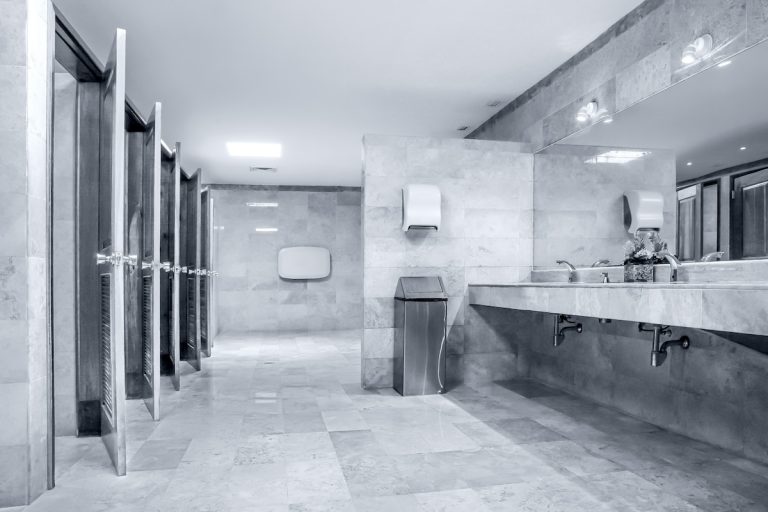
| Washrooms | Clean and disinfect toilets, urinals, sinks and partitions; mirrors and chrome; refill soap, towel and tissue; empty waste; damp mop floor |
| Kitchen / breakroom | Wipe counters, tables, sink and appliance exteriors; disinfect handles; empty waste and recycling; sweep and mop |
| Reception and lobby | Entrance glass spot-clean, mats vacuumed or shaken, reception desk wiped, seating tidied, floors cleaned |
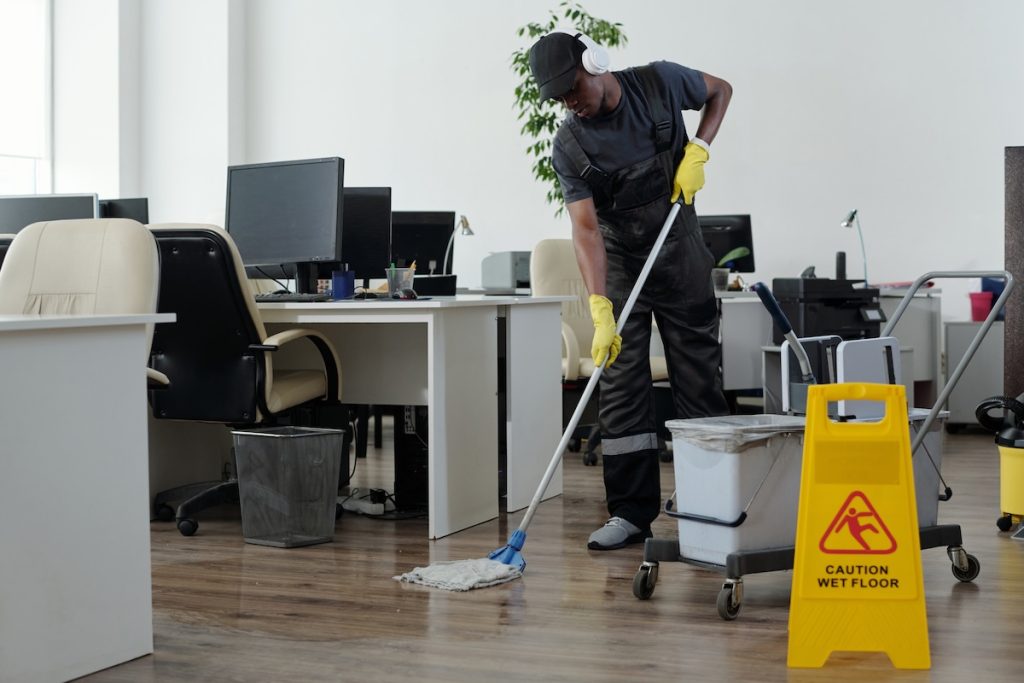
| Open office and workstations | Empty deskside waste, wipe shared surfaces, vacuum traffic lanes, tidy visible clutter without moving papers |
| Meeting rooms | Table wipe-down, chair reset, whiteboard clean, waste removal, glass spot-clean |
| High-touch points | Door handles, push plates, light switches, elevator buttons, rails, shared equipment |
| Waste and recycling | Collect, sort per building program, replace liners, move to designated bins |
What is included weekly and monthly
Quick answer: the tasks that do not need doing nightly but degrade a building slowly if they are never done at all. A scope of work without a weekly and monthly tier is an incomplete scope.
| Frequency | Tasks |
|---|---|
| Weekly | Full vacuum including under desks and edges; hard-floor damp mop throughout; dust horizontal surfaces and sills; interior partition glass; disinfect phones and shared devices |
| Monthly | High dusting; vents, diffusers and light fixtures; baseboards and door frames; elevator tracks and kick plates; detail corners and edges; wipe waste receptacle exteriors |
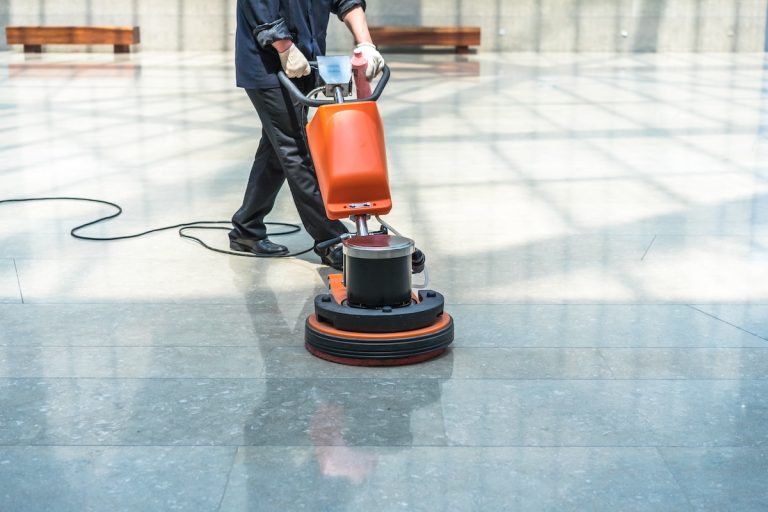
| Quarterly | Carpet spot treatment or extraction; hard-floor scrub and recoat; interior windows; upholstery; behind and under moveable furniture |
| Annual | Strip and seal or full floor restoration; deep washroom descaling; exterior window service; comprehensive building detail |
The quarterly and annual tiers are where contracts most often differ. Some providers bundle floor care and carpet cleaning into the monthly price; others quote them as projects. Both are legitimate, but you cannot compare two proposals until you know which model each is using. Our commercial cleaning cost guide gives typical per-square-foot figures for each of these items.
What is normally not included
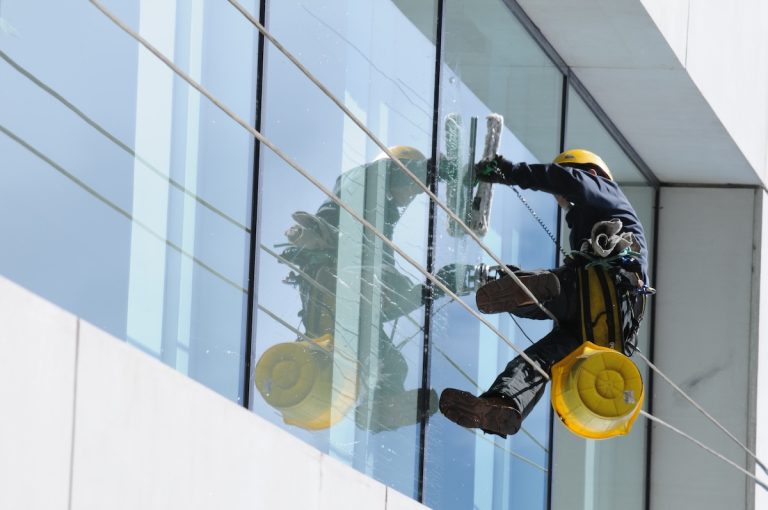
- Exterior window washing above ground level
- Post-construction or post-renovation cleanup
- Biohazard, sharps or hazardous-material remediation
- Pressure washing, snow and ice clearing, landscaping
- Moving furniture, boxes or IT equipment
- Personal dishes, personal items and desk paperwork
- Appliance interiors such as fridges and microwaves, unless scheduled
- Supplying washroom consumables, unless explicitly agreed
Consumables cause more friction than anything else on this list. Decide who buys hand towel, tissue, soap and liners, write it into the agreement, and set a re-order trigger. An empty dispenser on Monday morning is a contract-design failure, not a cleaning failure.
How the scope changes by facility type
| Facility | What gets added to the standard scope |
|---|---|
| Medical and dental | Documented disinfection protocols, colour-coded and separated equipment, treatment-room turnover procedures, regulated waste handling |
| Strata buildings | Lobby and amenity rooms, corridors and stairwells, garbage and recycling rooms, parkade sweeping, elevator interiors |
| Retail | Fitting rooms, display and fixture dusting, POS counters, entrance glass at higher frequency, sales-floor floor care |
| Warehouse and factory | Auto-scrubber floor cycles, dock and staging areas, racking and high dusting, lunchroom and locker areas |
| Banks and government | Security-cleared crews, escorted access, restricted-zone protocols, after-hours-only scheduling |
Green cleaning: what “included” means there
If your building pursues certification through the Canada Green Building Council, the scope also has to specify certified low-VOC products, microfibre systems, HEPA filtration on vacuums, dilution control and documented waste diversion. Ask for product names and safety data sheets rather than the word “eco-friendly” — every product on a cleaning cart requires a safety data sheet under WHMIS anyway, so the documentation already exists.
How to read a scope of work
Quick answer: a usable scope names the area, the task, the verb and the frequency. Anything vaguer is a placeholder that will be interpreted in the provider’s favour on a busy night.
| Weak wording | What it should say |
|---|---|
| General office cleaning | Vacuum all carpeted areas including edges and under desks — weekly; traffic lanes — every visit |
| Clean washrooms | Clean and disinfect all fixtures, refill all dispensers, damp mop floor with disinfectant — every visit |
| Dusting as needed | Dust all horizontal surfaces below 6 ft — weekly; above 6 ft — monthly |
| Floors maintained | Damp mop hard floors — weekly; scrub and recoat — quarterly; strip and seal — annually |
Three more checks before you sign: are cleaner-hours per visit stated, is the inspection schedule written down, and is periodic work dated rather than described as “periodically”? Our guide to what businesses should expect from commercial cleaning services and the walkthrough in how to choose a commercial cleaning company both cover the negotiation side of this.
How the time behind your scope is estimated
Quick answer: estimators convert your task list into minutes using production rates — how much area or how many fixtures one cleaner covers per hour. Knowing the rough figures lets you check whether a scope and a price can both be true.
| Task | Typical production rate |
|---|---|
| Nightly office routine (waste, spot-clean, traffic-lane vacuum) | 3,000–4,000 sq ft per hour |
| Full vacuum including edges and under desks | 2,000–3,000 sq ft per hour |
| Damp mop hard floor | 2,500–3,500 sq ft per hour |
| Washroom clean, disinfect and restock | 5–8 minutes per fixture |
| High dusting | 1,500–2,500 sq ft per hour |
| Interior glass and partitions | 150–250 sq ft of glass per hour |
Run your own building through it. A 5,000 sq ft office with eight washroom fixtures needs roughly 1.4 hours for the nightly routine plus 0.8 hours of washroom work — about 2.2 hours a night before kitchen, waste and entrance time. If a proposal implies 75 minutes, the scope and the price are describing different buildings.
Quick reference: included, negotiable, or extra
| Item | Status in a typical contract |
|---|---|
| Cleaning chemicals and equipment | Always included (contractor supplied) |
| Washroom and kitchen consumables | Negotiable — must be stated |
| Liners and waste bags | Negotiable, usually with consumables |
| Carpet extraction and floor recoating | Either bundled or quoted separately — confirm which |
| Interior window cleaning | Usually included on a quarterly cycle |
| Exterior windows above ground level | Extra, specialist contractor |
| Post-construction cleanup | Always extra |
| Day porter coverage | Extra, billed hourly |
| Emergency or same-day callout | Extra, unless a callout allowance is written in |
Three things worth adding to any standard scope
- A reporting duty. Require the crew to log building issues they notice — a dripping tap, a door not latching, a burnt-out exit light. Your cleaners are in the building more often than anyone else and see problems before they escalate.
- A winter entrance clause. From October to March, specify additional matting, wet-floor management and a lobby floor check on every visit. It is the single highest-value seasonal addition in Metro Vancouver.
- A consumable trigger. Name a re-order threshold rather than “restock as needed”, so nobody discovers an empty dispenser on a Monday morning.
Frequently asked questions
Does commercial cleaning include washroom supplies?
Not automatically. Cleaning chemicals and equipment are always the contractor’s. Consumables such as hand towel, tissue, soap and liners are negotiable — either you stock them or the provider supplies them at cost plus a handling fee. It must be stated in the agreement.
Is window cleaning included in commercial cleaning?
Interior glass spot-cleaning is normally included every visit, and full interior window cleaning is typically quarterly or semi-annual. Exterior window work above ground level is a separate specialty service with its own insurance requirements.
Do commercial cleaners disinfect or just clean?
Both, but for different surfaces. General surfaces are cleaned; high-touch points and washroom fixtures are cleaned and then disinfected with a product left at its required contact time. Medical and food-handling environments follow stricter documented protocols.
Will cleaners tidy desks and wash dishes?
No. Standard scopes exclude personal items, paperwork and personal dishes, both for privacy reasons and because it is not maintenance cleaning. A clear-desk expectation for staff is the usual solution.
Get a scope of work written for your building
Vancouver Office Cleaners writes the task list by area and frequency, states hours per visit, and dates the periodic work — so you know exactly what you are buying. We cover commercial cleaning across Metro Vancouver, bonded and insured.